
CloudWave 360 Newsletter: Spring 2026 Edition
From the CloudWave Team
Hello friend,
Welcome to the Spring issue of CloudWave’s 360 Community Newsletter. This publication delivers leadership insights, practical security guidance, and product updates across CloudWave’s core offerings—Cloud, Cybersecurity, and Compliance—designed to help you strengthen operations, manage risk, and support resilient care. Thank you for being part of our community.
Brian Lamberger talks about Operational Resilience

General Manager Cybersecurity
We sat down with Brian Lamberger, CloudWave’s General Manager of Cybersecurity Solutions, to discuss the importance of Operational Resilience in healthcare enterprises and how today’s Security Risk Assessments have evolved.
How do you define Operational Resilience?
Operational resilience in healthcare is the ability to continue delivering care when, not if, something goes wrong. It is not about avoiding every incident. It is about being prepared, containing impact, and recovering quickly. A cyber event that takes an organization down for days is not a resilience failure. It is a sign that the foundational work was not done. True resilience means clinicians can still function, systems can be restored cleanly, and decisions are not made in chaos.
Why is protecting a healthcare organization against today’s threats different than other industries?
Healthcare is fundamentally different from other industries because the stakes extend beyond data. A breach disrupts care delivery and can directly impact patient safety. The attack surface includes clinical devices such as infusion pumps and imaging systems that cannot run endpoint security agents, creating visibility gaps that require distinct detection approaches. Add legacy infrastructure, limited IT resources, and layered regulatory obligations spanning HIPAA, cyber insurance requirements, and evolving federal guidance, and the environment becomes uniquely complex. Healthcare organizations are not just protecting data. They are protecting the ability to treat patients.
What makes today’s Security Risk Assessments different than those done in the past?
Security Risk Assessments have evolved from compliance exercises into strategic risk management tools. The question is no longer whether an organization is compliant. It is where the organization is vulnerable and what matters most to address. Modern assessments align with frameworks such as NIST CSF 2.0, account for current insurance underwriting requirements, and produce prioritized findings that guide leadership decisions on budget and strategy.
My organization has limited resources. How can I show leadership the value of upgrading our cybersecurity approach?
For resource-constrained organizations, the key is translating cybersecurity into business impact. Leadership does not invest in tools. They invest in outcomes: reduced downtime, faster recovery, audit readiness, and lower risk. Framing cybersecurity as operational continuity changes the conversation. The goal is not more technology. It ensures the organization can function when it matters most.
 Market Spotlight
Strategies for cloud resilience and AI-enabled threat detection to minimize downtime and speed incident response.
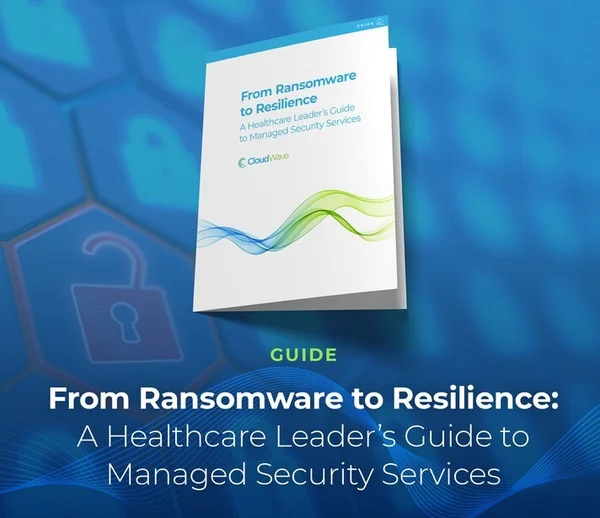 From Ransomware to Resilience: A Healthcare Leader’s Guide to Managed Security Services
Healthcare organizations are under relentless attack. Ransomware gangs target hospitals knowing that patient care cannot be interrupted.
 Industry Pulse
Emerging healthcare cybersecurity and compliance trends, summarized with actionable takeaways for leadership and security teams.
 The Threat Landscape Has Changed — Your Security Risk Assessment Should Too
For years, many healthcare organizations approached the HIPAA Security Risk Assessment (SRA) as a regulatory requirement: document risks, update policies, and ensure the report is on file. But healthcare cybersecurity has changed dramatically over the past decade. The threat landscape facing hospitals, rural providers, and senior living organizations today bears little resemblance to the environment that shaped many traditional assessment models.
 Solutions in Focus
Spotlight on CloudWave and BlueOrange Compliance solutions designed to reduce risk and improve operational resilience.
Managed EDR
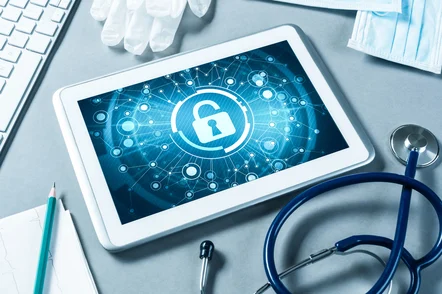 Endpoints are now the front lines of cyberattacks—and healthcare organizations are uniquely exposed. CloudWave’s Managed Endpoint Detection and Response (EDR) service, powered by SentinelOne, brings automated, intelligent, and healthcare-aware defense to every endpoint. Whether facing ransomware, phishing, or rogue applications, CloudWave ensures fast response and resilient protection.
Cybersecurity Insider Program (CIP)
CloudWave’s Cybersecurity Insider Program is a community focused on taking action to protect your patients and healthcare organizations from cyberattacks.
You’ll get exclusive access to live quarterly insider sessions, on-demand education, access to cybersecurity experts, and more.
 SOC Corner
Threat intelligence and operational insights from our Security Operations Center.
 NEW! CloudWave’s Threat Intelligence Briefs
CloudWave’s Weekly Threat Intelligence Briefs keep healthcare and technology organizations informed about the latest cyberattack campaigns, vulnerabilities, and threat actors targeting their industries. Each edition pulls from trusted sources, including CISA, Google Threat Intelligence, and leading cybersecurity research firms, and translates complex findings into clear, prioritized actions your team can act on immediately. From critical patch deadlines to supply chain risks and nation-state activity, we do the monitoring so you can focus on your business.
Our monthly newsletter will also touch on medical device security and other pertinent threats in the healthcare space. Visit the Threat Brief Library →
March recap
March’s focus was on the cyberattack on Stryker Corporation, one of the world’s largest medical device companies, which was hit by a destructive cyberattack. It marked the first confirmed Iran-linked cyberattack on a major U.S. healthcare organization and a signal that geopolitical conflict is now showing up in American hospital systems.
 Compliance & Risk Update
Expert commentary from BlueOrange Compliance on regulation, audit readiness, and practical risk reduction strategies.
Schedule your HIPAA Security Risk Assessment Today
Don’t wait for a compliance deadline or cyber incident to put your hospital at risk.
Read More →
Ask BlueOrange
Have a question regarding compliance?
Ask a Compliance Expert →
 Events & Learning Opportunities
Join our upcoming webinars and virtual roundtables.
 Webinar: Running Endpoint Security at Scale
Join CloudWave’s cybersecurity leaders for an in-depth session on June 4 at 2:00PM
COMING IN JUNE
 Partner & Technology Highlights
Updates from strategic alliances and joint initiatives that extend our capabilities.
 Google SecOps Collaboration
Through this collaboration, CloudWave customers will benefit from Google Security Operations’ advanced AI-driven detection and automated workflows, and real-time incident response delivered by CloudWave, helping organizations avoid emerging cyber risks while controlling costs.
Google is named a Leader in the 2025 Gartner® Magic Quadrant™ for SIEM
 SentinelOne Integration
Learn how CloudWave’s Managed EDR service, built on the proven SentinelOne AI-powered platform and delivered by our healthcare cybersecurity experts, helps hospitals detect, contain, and eliminate endpoint threats before they cause harm.
For the fifth year in a row, SentinelOne has been named a Leader in the 2025 Gartner® Magic Quadrant™ for Endpoint Protection Platforms. See why in the latest report.
 Stay Connected
Resources, libraries, and ways to engage with CloudWave & BlueOrange Compliance.
 Cybersecurity Insider Program
Learn more→
 Resource Library
Learn more→